Showing posts with label nuclear safety. Show all posts

April 08, 2013

"Exposure: Radiation Victims Speak Out" Web Series Reveals Personal Struggles, Triumphs

Over 20 years ago, the Hiroshima newspaper Chugoku Shimbun sent a team of reporters to 15 nations around the world to gather personal accounts of people affected by radiation - from reactor accidents, accidental contamination, to nuclear weapons manufacturing and testing. The interviews were initially published as a series of eight newspaper features titled "Sekai no Hibakusha," or "Hibakusha (figuratively, "atomic bomb survivors") Around the World." This monumental series won a Japan Newspaper Publishers and Editors Association award in 1990, and was subsequently published in book form the following year. Executive Director of the Chugoku Shimbun Yukio Ogata explains,
"Largely as a result of the articles' success in bringing the public's attention to the dangers of radiation, a number of victims of radioactive contamination from areas as far-flung as Chernobyl and Bikini Atoll were able to participate in the world convention held in Hiroshima by the International Physicians for the Prevention of Nuclear War in October 1989...[T]he convention heard details concerning the damage caused by nuclear testing in Kazakhstan, which until then had been shrouded in secrecy. In turn, this disclosure of widespread destruction of the environment prompted the Chugoku Shimbun to instigate the first-ever investigation of the testing area.

At the same time, the articles served to emphasize the role that Japan could play to help radiation victims around the world. The fact that the articles have prompted the exchange of information concerning the treatment of radiation victims in Japan to help those in a similar plight in other countries is a great source of satisfaction to us at the Chugoku Shimbun. We hope that, in the future, Japan will become known as an information center for radiation victims and the treatment of their illnesses."
In March 2013, the Hiroshima Peace Media Center re-released the entire series of 134 interviews free online as "EXPOSURE: Victims of Radiation Speak Out". From the English-language introduction by Dr. Robert Jay Lifton, Director of the Center on Violence and Human Survival at the CUNY John Jay College of Criminal Justice notes,
"There is compelling appropriateness in the project's being undertaken by concerned journalists from Hiroshima. From the time the bomb was dropped, the Chugoku Shimbun, as Hiroshima's leading newspaper, has been a prime source of information about the experiences and feelings of the people of that city over subsequent decades. Its editors and writers have taken on what I call a 'survivor mission' on behalf of the city's victims, a commitment to transforming the fear, conflict, and pain of the survivors into an active exploratory enterprise of profound significance.

Their contribution goes even beyond their descriptions of the human effects of radiation. In the way they have approached their study, they have demonstrated what I call a species mentality, a commitment that transcends immediate group or nationality and extends to all of humankind. They evoke in us a sense of shared fate, of universal susceptibility to a technology that knows no boundaries, geographical or temporal. We are all in this together, as potential victims and potential perpetrators as well.
Among the regions and incidents covered in these interviews are Chernobyl, the 1987 Goiânia Accident in Brazil, contamination from the Cold War weapons program at Semipalatinsk, Kazakhstan, and the Hanford Nuclear Reservation site in Washington State.

[Image courtesy Hiroshima Peace Media Center: "The mushroom cloud as seen from Kure, approximately 18 kilometers southeast of Hiroshima. This photo was taken by Masami Oki about 40 minutes after the bomb exploded."]

More:

March 26, 2013

Chernobyl Database: A New, Useful Research Tool

While having much of the Internet at one's disposal through search engines is a wonderful thing - especially when you know what you're looking for - specialized blogs like the new Chernobyl Database (launched February 2013) also serve a vital purpose: they can help point you in the direction of new research studies and findings you may have been unaware of.

Chernobyl Database, which I believe is based in Japan, focuses fairly narrowly on posting papers studying the effects of radiation and radioactive contamination on the environment and health, but it also ventures deeply by including links to research going back several decades. Entries are primarily in English, with separate categories for articles published in Japanese and Russian. I think you'll find it a valuable resource.

November 30, 2012

Chernobyl's New Safe Confinement Rises: The First Stage

After nearly two decades of administrative, political, and financial setbacks, major progress is being made now at the New Safe Confinement. Having been previously called "Ukritye" and the "Shelter Implementation Plan" over the years, the secure NSC outer shell being built over the decaying Chernobyl Sarcophagus will allow Reactor 4 to finally be safely dismantled with greatly reduced risk to the environment.

In the clip below, Vince Novak, the EBRD [European Bank for Reconstruction and Development]'s Director of Nuclear Safety discusses the construction progress and the NSC's benefits.


This video (:35) shows a time-lapse version of the first NSC section's raising.

November 16, 2012

New Mitsubishi Videocamera Can "See" Radioactivity

Mitubishi Heavy Industries, Ltd. of Japan announced it will begin marketing early next year the Astrocam 7000 HS, a new type of video camera that can show a superimposed display of radioactivity on its wide-angle 180-degree image, allowing cleanup crews and emergency responders to see "hot spots" in real time. The Asahi Shimbun reports,
"The portable camera, which will apply technology jointly developed with the Japan Aerospace Exploration Agency (JAXA), is designed to allow for more efficient clean-up of radioactive contamination, an issue of great concern in Japan because of the nuclear disaster last year. The camera will use technology now in place on observation equipment aboard the ASTRO-H X-ray astronomy satellite operated by JAXA.

Tadayuki Takahashi, a professor of space physics at JAXA and project manager of the ASTRO-X, said, "The camera can measure radiation in high places, such as on roofs, and will lead to more efficient decontamination of radiation." Using two types of semiconductor sensors, the direction and strength of gamma rays emitted by radioactive materials such as cesium are measured and brought to light as a superimposed image on the visible landscape."
Mitsubishi this week also announced another breakthrough in nuclear cleanup technology, an armored seat that would reduce heavy equipment operators' exposure to radiation by half, and theoretically allow workers to remain twice as long in hazardous areas before receiving maximum permitted radiation doses:
The seat material, including body armor parts (shoulders, arms, chest/abdominal area, thighs, neck), consists mainly of tungsten sheet, which offers excellent radiation shielding capability. Although the seat weighs a considerable 130 kilograms (kg), individual parts weigh less than 20kg and most of their weight is integrally supported by the seat, so the burden on the operator is minimal.

In addition, the operator can put on and remove the armor-like parts easily by opening/closing the front like a vest...these features provide a high rate of radiation shielding while simultaneously minimizing fatigue during continuous work and inconvenience to machine operation from wearing such shielding.
Here, Mitsubishi Heavy Industries demonstrates the Astrocam and explains its technology in this one-hour press conference video (in Japanese, no subtitles).


[Image of demonstration camera view courtesy of Asahi Shimbun Online] More on the Mitsubishi Astrocam 7000HS camera:

October 24, 2012

Self-Powered Sensors Enable Monitoring Reactor Fuel Rod Status During Total Power Failures

Researchers at Penn State and Idaho National Laboratory have announced an important breakthrough in sensor technology that promises to improve operating safety and control of reactors in the event of total power failure:
Penn State researchers [have] teamed with the Idaho National Laboratory to create a self-powered sensor capable of harnessing heat from nuclear reactors' harsh operating environments to transmit data without electronic networks. The team [are presenting] their research at the Acoustical Society of America's...164th Meeting, October 22-26, 2012, in Kansas City, Missouri.

"Thermoacoustics exploits the interaction between heat and sound waves," explains Randall A. Ali, a graduate student studying acoustics at Penn State. "Thermoacoustic sensors can operate without moving parts and don't require external power if a heat source, such as fuel in a nuclear reactor, is available."
In the unlikely (but not unprecedented) event of complete power failure, as occurred when backup generators at Fukushima were flooded with seawater following the earthquake and tsunami of 11 March 2011, these self-powered sensors would allow plant operators to continue monitoring conditions within the reactor in the critical first minutes and hours of an emergency.

September 24, 2012

Uranium Film Festival Coming to Berlin October 4-12, 2012

If I could snap my fingers and be in Berlin this October 4th through the 12th, I'd love to attend this remarkable Brazil-based international event:
The International Uranium Film Festival is dedicated to films about atomic bombs the whole nuclear fuel chain and radioactivity: Uranium mining, nuclear power plants, atomic bombs, nuclear waste, radioactive risks, nuclear medicine. The festival wants to stimulate the production of independent documentaries, movies and animated films about any nuclear or radioactive issue.
Uranium Film Festival is a project of the Yellow Archives, a cultural and educational organization that hopes to increase public information about nuclear power, nuclear waste, uranium mining and radioactivity in general. Yellow Archives is the first-ever film library in Brazil and Latin America dedicated to non-profit, educational and research films about the nuclear fuel chain and radioactivity, and makes its archives open to schools, universities and other non-profit organizations. Among the films to be screened are Roberto Pires' riveting Cesio-137: El Pesadelo de Goiânia (Cesium-137: The Nightmare of Goiânia), the 2011 Audience Award winner for Best Feature Film, and Bill Kiesling's 2012 "Yellow Oscar"-winning documentary, "Not for Public Release: a Nuclear Incident in Lock Haven."

The next Uranium Film Festival is scheduled for May 2013 at Rio de Janeiro's Museum of Modern Art. The Uranium Film Festival and the Yellow Archives depend primarily on private funding for their work; you can get involved by becoming a sponsor, or by making a donation to the film festival. The full program of the upcoming October event in Berlin is available here [PDF], and you can also view the program brochure of the 1st Uranium Film Festival from 2011.

September 19, 2012

Argonne National Laboratory Energy Showcase: Photo Slideshow

As promised, Part Two of our coverage of the Saturday, September 15th Argonne Energy Showcase open house event. Our video highlights can be seen in the first installment of our Energy Showcase posts. Here's our full Flickr slideshow of over 50 photos with captions. Top: "Now, That's Cold!" Argonne researcher explains the technology behind the ATLAS (Argonne Tandem Linac Accelerator System) facility, the world's first superconducting linear accelerator for heavy ions. The object on the table is a model section of ATLAS' "superconducting split-ring resonator."

Center: "Hot or Not?" This very popular FLIR imaging exhibit in the Nuclear Energy building allowed visitors to see live video of themselves in the room with color-coded temperature gradients. As you can see, some people are literally hotter than others. A similar station set up in the Advanced Photon Source (401) complex let visitors take home a snapshot printout of their FLIR scans.

For even more images, visit Argonne National Lab's official Flickr photostream.
Bottom: "Clean and Green" One of the several advanced hybrid electric vehicles in the Sustainable Energy Tent. Some of the other new technologies on display were demonstrations of biofuel generation using fermented waste, vehicle charging stations, and an area where visitors could ride the "Energy Bike" to see how much pedaling they have to do to light up a conventional incandescent light bulb, versus the effort needed to make LED and compact fluorescent devices glow. As we can vouch, it takes a lot less legwork to make those clean and green LED's shine!

September 18, 2012

Video Highlights from Argonne National Lab's Energy Showcase 2012

Didn't get a chance to visit Argonne National Laboratory's 2012 Energy Showcase in the Chicago suburbs this past September 15th? Don't worry: we're very happy to share our video and photo highlights from this rare opportunity to peek inside the birthplace of modern nuclear science, and see first-hand some of the amazing research being done in America's heartland.

According to an on-site event organizer, this year's open house was the first one held in five years, after tighter security restrictions post-9/11 put National Laboratory open houses on hold. This year's Energy Showcase was also the first to require visitors to pre-register online. While past events had as many as 20,000 visitors each, Energy Showcase 2012 hosted a more modest registered attendance of approximately 2,000* - not necessarily a downside if you were seeking a good, close look at the dozens of fascinating exhibits on hand. [*According to another person I spoke to later, the registration attendance was capped at 10,000, so I may have misheard the original attendance estimate. If any readers out there have more solid attendance stats, please let us know in the comments! - LR]

First, let's stop in at the Physics building to have a look at the Gammasphere, the world's most powerful spectrometer for nuclear structure research. If the Gammasphere looks familiar, you may remember that the device had a 'guest starring role' in the 2003 feature film "Hulk," as the contraption that triggered Bruce Banner's verdant transformation - back then, it was physically located at Lawrence Berkeley National Laboratory. Read more at http://www.phy.anl.gov/gammasphere/index.html


Next, let's take a short drive south to the nearby Advanced Photon Source complex, a facility which provides the brightest x-ray beams in the Western Hemisphere to more than 5,000 scientists from around the United States and the world. Here's a panned view from the APS observation gallery, as a researcher gives a basic explanation of its workings in the final 30 seconds or so of the video. In person, the building and equipment are remarkably large; what you see here on the video is only a tiny fraction of the APS accelerator "ring." More at http://aps.anl.gov/About/APS_Overview/


Here is a live demonstration of a technique called "acoustic levitation" that uses high-frequency (~22kHz) sound waves to suspend small objects like liquid droplets, plastic spheres, and popcorn in mid-air. Bystanders could manipulate and rearrange the plastic beads within the sound column using a metal spoon, creating intriguing patterns. As you can see from the video, the column behaves as though the beads are 'magnetically' attracted along an invisible vertical line running between the upper and lower sound generators. The demonstrators explain that the beads are spaced at wavelength node intervals of about one-third inch, allowing visualization of the standing wave. More at http://www.anl.gov/articles/no-magic-show-real-world-levitation-inspire-better-pharmaceuticals


Down the hall, we stopped by to see an X-ray diffraction demonstration, which provides a simulation of how the APS' powerful X-ray beam can reveal the before-unseen inner structures of nanoparticles, proteins, crystalline structures, organic molecules, and many other materials. More at http://aps.anl.gov/


In part 2 of our look inside Argonne National Laboratory, we'll visit ANL's Nuclear Museum, home of many historical treasures from the dawn of the Atomic Age.

August 06, 2012

"Inside Chernobyl (2012)": A Documentary by Adrian Musto

Much has been said here and elsewhere on the longstanding tragedy of Chernobyl, so I'm always pleasantly surprised to find a fresh look at the topic. Today I discovered a documentary by Adrian Musto, a photographer and filmmaker who also posts under the nom de Web Arkitekture. What's he's created here "on no budget" (in his words) using footage from a recent visit to Ukraine and Pripyat, is remarkable. Beginning with some archival videoclips from the first days of the 1986 accident, the film captures the haunting air of present-day Pripyat, the soon-to-be "New Safe Confined" Sarcophagus, interviews with residents, and some on-the-spot radiation meter readings of objects and structures. I'm sure you'll find "Inside Chernobyl" fascinating. [Note: some of the images may be disturbing to sensitive viewers.]


Musto's photos from Chernobyl, viewable in a gallery on his website, are also stunning. You can listen to some of his Chernobyl trip backstory at Deep Inside Podcast from July 10, 2011, which features very nice atmospheric IDM music from Kiev-based producer Queensway.

June 11, 2012

"Lessons Learned from 'Lessons Learned': The Evolution of Nuclear Power Safety After Accidents and Near-Accidents" (AAAS monograph, 2012)

Continuing our theme of our evolving understanding of nuclear power safety, I'd like to highlight an excellent - and timely - paper just released by the American Academy of Arts and Sciences, "Lessons Learned from 'Lessons Learned': The Evolution of Nuclear Power Safety after Accidents and Near-Accidents," by Edward D. Blandford and Michael M. May. From the preface:
"As countries struggle to meet the electricity demands of their growing populations while also reducing their carbon footprints, many have turned to nuclear energy. The U.S. nuclear energy program may not increase significantly in the coming decades, but other countries, including many developing countries, have plans for rapid expansion. Even after the recent accident at the Fukushima Daiichi Nuclear Power Plant in Japan, the global trend toward expansion of nuclear energy has continued.

While serious accidents like Fukushima, Three Mile Island, and Chernobyl can provide invaluable lessons, the nuclear industry, nuclear regulators, and the research community must study minor incidents and near-accidents as well. These experiences often reveal not only how to decrease the likelihood that the same mistakes will occur, but also how to avoid larger accidents that may be foreshadowed in earlier, smaller incidents.

In this paper, Edward Blandford and Michael May enumerate the lessons from nuclear accidents and incidents, asking whether the nuclear energy community has indeed learned from those lessons. The authors argue that stakeholders must commit to ongoing improvement of their protocols and standards. Each nuclear incident—no matter its size—underlines the importance of pursuing high standards of safety, security, and proliferation resistance."
One standout key finding in "Lessons Learned..." is on page 23, in Table 1, "Main Sources of Electricity in the World and Their Morbidity and Greenhouse Gas Emissions Per Unit of Electricity Produced." The authors find that while nuclear energy is the fourth most prevalent form of electricity generation worldwide (at 14% of global usage), it is associated with the lowest number of deaths per terawatt hour (0.04). The least common form of generation, wind power (< 1% of global usage), somewhat surprisingly has a morbidity rate of 0.15 deaths per terawatt hour, but I suspect many of these might be a result of accidents involving installation or maintenance of the wind turbines, rather than the operating process itself.

If you're pressed for time, the paper's executive summary provides an informative primer on its conclusions and policy recommendations for the industry. The paper is available as a free PDF download as part of the AAAS' Occasional Papers series at http://www.amacad.org/publications/lessonsLearned.aspx, or as hard copy for a nominal fee from the AAAS.

June 06, 2012

'Meltdowns' Making Safer Reactors: CEA's PLINIUS Platform and Finland's VTT

[See also "Alexander Borovoi: Chernobyl Explorer"]

The mention of the word meltdown conjures our deepest fears about nuclear power: an out-of-control reactor core collapsing into molten radioactive "lava" that consumes metal, reactor housings, concrete foundations - even, as cautionary tales warn, the ground beneath the reactor itself. While the "China Syndrome" is thankfully just a frightening fiction, complete or partial meltdowns have occurred in several severe accidents, notably Three Mile Island, Chernobyl, and most recently at three of Fukushima Daiichi's reactors. Recent European studies have even suggested that the likelihood of a severe accident is much higher than previously thought:
"Based on the operating hours of all civil nuclear reactors and the number of nuclear meltdowns that have occurred, scientists at the Max Planck Institute for Chemistry in Mainz and the Cyprus Institute have calculated that such events may occur once every 10 to 20 years (based on the current number of reactors) - some 200 times more often than estimated in the past."
Clearly, one important goal must be designing reactors that resist losing structural integrity in the event of an accident or meltdown, that can reliably withstand molten corium's extreme temperatures without breaching containment. Our scientific understanding has been limited in the past by the difficulty of studying meltdowns during actual emergencies, and in recreating their volcanic conditions in a controlled environment. This is one of the reasons why the innovative prototypic core melt research being performed at facilities like CEA's PLINIUS Platform, and the VTT Technical Research Centre of Finland, is crucial in developing new building materials for safer nuclear plants, as well as learning to prevent meltdowns and minimizing environmental exposure should one occur.

PLINIUS is an experimental platform for the study of severe accidents using prototypic corium, laboratory-created high-temperature molten mixtures containing depleted uranium oxides that recreate the "melt" of theoretical "meltdowns".

Its four facilities study different aspects of corium formation and behavior: VULCANO is a "50-100 kg corium melting facility," where oxides and metals are combined in a rotating cylindrical furnace and melted using induction heating, transferred plasma arc technology, or through exothermic redox reactions ("uranium thermite"). The "melt" is then poured into a test section of concrete, ceramic, or other material to study flow patterns, chemistry, and resulting material structure. COLIMA is a smaller, enclosed induction-heated unit that allows study of corium/gas interaction and aerosol formation, while KROTOS is used to observe and measure the behavior of small (~5kg) quantities of corium when dropped into water. As PLINIUS' site understatedly describes, "energetic steam explosions can be triggered and studied":
Heat transfer between the hot molten core with the colder volatile water [in KROTOS] is so intense and rapid that the timescale for heat transfer is shorter than the timescale for pressure relief, leading to the formation of a shock wave. This shock wave is intensified as a result of further mixing and energy transfer as it travels through the mixture.
The smallest of PLINIUS' facilities, VITI, (image above is a tiny molten corium droplet in the VITI crucible) specializes in tests using corium samples of less than 100 grams, mainly used for thermophysical/thermochemical property analysis, or controlled-atmosphere material interaction tests.

While Finland's Technical Research Center (VTT) conducts international applied industrial research and analysis in a variety of fields, its nuclear reactor safety program has also developed advanced simulated reactor environmental modeling (APROS) and reactor aging studies, as well as joint corium melt research with CEA's PLINIUS. Ongoing research into the science behind meltdowns, such as the work being done at PLINIUS and VTT, will help create safer, more accident-proof nuclear reactors and containment structures for our world's endlessly growing need for cleaner energy.

CEA PLINUS Platform Research Links: VTT Research Links:

May 14, 2012

Mae Keane: The Last "Radium Girl"

"You'd better find another job," said Mae Keane's boss at the Waterbury Clock Company of Vermont, when her luminous dial-painting productivity flagged. Mae thought the radium paint was too bitter-tasting, so she refused to use her colleagues' "lip-pointing" technique to create a sharp tip on her paintbrush by placing it in her mouth.

This bit of insubordination may have cost her a well-paid (a reported 8 cents per dial; about $1.00 today) summer factory job in 1926, but it probably saved her life. Back then, Mae's workplace friend Elsie gave her some frightening advice: never have a tooth pulled, because the wound would never heal.

"It was kept a secret in my young age and we didn't know what it was all about," Keane said. "People were dying and we didn't know why." Despite a history of health difficulties likely linked to her radiation exposure as a young woman, 105-year old Ms. Keane is the last surviving "Radium Girl."

For years, Middlebury, Vermont high school freshman Tim Cohn had been interested in his aunt Mae's accounts of working at the Waterbury Clock Company. Now Cohn's research on his aunt, her experiences, and the attempt to cover up what happened to the Radium Girls have made him a finalist in the National History Day contest, to be held at the University of Maryland in College Park, Md. this June 10-14. Congratulations, Tim - and best wishes to your aunt Mae!

UPDATE: Tim Cohn was awarded the bronze medal in the Senior Individual Exhibit category at National History Day. Our sincere congratulations!

Here is a small sampling of links dedicated to the remarkable Radium Girls story; not just those who worked at the Waterbury plant, but those at locations around the nation in the 1920's and 30's. [Image from Hearst Sunday supplement American Weekly, February 28, 1926]

April 30, 2012

RadioActive! Casefiles: The Goiânia Accident (1987)

A little over one year after Chernobyl focused the world's attention on what was then the worst-ever civilian industrial nuclear disaster, the Brazilian city of Goiânia became the scene of another major radiological accident, resulting in several fatalities and widespread contamination. [A definitive 1988 report is available online at IAEA.org. See links and videos at the bottom of this post.]

On September 13, 1987, two men broke into the Instituto Goiano de Radioterapia (IGR), a partially demolished private cancer radiation therapy facility, and carted away a 300kg object in the belief they'd a found a valuable scrap metal item. Roberto dos Santos Alves and Wagner Mota Pereira took the object to Alves' home, about one-half kilometer north of the clinic, and began to dismantle it.

Over the next few days Alves and Pereira cut away at the metal exterior and managed to puncture the casing. Despite the fact both men started to become violently ill with vomiting and diarrhea, they continued their efforts, eventually cracking open the device - inside was a smaller metal canister with a movable "window." When the inner canister's window was pried open, it revealed a mysterious blue glow inside the inner shell. The men scraped away and extracted several small chunks of the glowing blue substance within with a screwdriver to keep as "souvenirs."

On September 18th, Alves sold the object to Devair Alves Ferreira, a nearby scrap dealer. Fascinated by the blue glow, Ferreira invited his family and friends over to see and touch the object. Ferreira's brother Ivo brought some of the powder from the canister home and spread it on his floor; innocently, his 6-year-old daughter Leide played with the powder, rubbed it on her skin, and even ingested a small quantity. Over the next several days, she and others who handled the glowing powder fell ill with vomiting, diarrhea, skin rashes, burns, and blisters.

Now fearing the object was "killing her family," the scrap dealer's wife Gabriela placed it in a plastic bag, boarded a bus, and brought it to the Vigilancia Sanitaria hospital on September 28. One of two doctors who met with Gabriela that day suspected the danger, and placed the bag on a chair in the outer hospital garden, as far away as possible from human contact.

The following morning, a visiting medical physicist with a borrowed radiation detector confirmed the doctor's fears - the hospital now was massively contaminated with radiation. The physicist, identified only as "W.P." in official reports, initially encountered a great deal of resistance alerting authorities to the severity of the emergency. By the end of the following day, W.P. convinced the Secretary for Health of Goias State and the Director of the Department of Nuclear Installations in CNEN to begin a massive search and cleanup operation in the area.

What Alves and Pereira unknowingly brought home from the abandoned clinic was a lead-shielded cancer therapy device containing a lethally radioactive cesium137 chloride (salt) core. All told, 130,000 people were tested for radiation at area hospitals, about 250 were found to be contaminated, and 20 required treatment for radiation sickness. Several houses within the neighborhood had to be demolished, and the rubble buried in a remote waste site. The cleanup effort also was hampered not only by the length of time that passed since the core was exposed and handled, but also by the fact the radioactive powder was water-soluble.

Four deaths are attributed to direct exposure to the cesium core: Leide and Gabriela Ferreira, and two of Devair Ferreira's scrapyard employees succumbed to radiation poisoning about a month after receiving radiation doses of 4.5 to 6.0 Gy (500 to 600 REM). Leide was buried in a lead coffin surrounded by concrete in a Goiânia cemetery, where crowds protested her burial, fearing their relatives' graves would be contaminated. Remarkably, Devair Ferreira survived his massive 7.0 Gy exposure.

The accident - rated 5 on the International Nuclear Event Scale [INES] - spread radioactive contamination throughout the Goiânia districts of Aeroporto, Central, and Ferroviários. To this date an estimated 7 of the device's nominal 50 TBq (terabecquerels) of radioactivity remain unaccounted for.

Image at top from the IAEA 1988 report on the Goiânia Accident. Lower image, by Alexander Sassaki/SIPA Press appears in "Radiation Accident Grips Goiania," by Leslie Roberts, Science, 1987 (see link below). *Featuring very effective use of Kraftwerk's "Radioactivity" as the backing track when one of the scrapyard employees discovers the cesium's blue glow in a dark storeroom, recalling the famous story of when the Curies found their radium-purifying lab apparatus aglow at night

April 27, 2012

Jellyfish-Like Creatures Cause Shutdown of Diablo Canyon Nuclear Plant

An influx of "thumb-sized" creatures in cooling sea water proved too much for a California nuclear power plant this week, according to NDTV:
The Diablo Canyon nuclear power plant, in San Luis, California, shut down its Unit 2 reactor after sea salp, a planktonic jellyfish-like creature clogged the screens of the plant’s coolant water intake. The influx of the gelatinous animals was discovered Wednesday. Initially, plant operators reduced its functional reactor to 25% capacity. Unit 1 had a scheduled refueling earlier in the week, and had been shut down.
In smaller quantities away from industrial activity, Salps have been known to have a beneficial effect on seawater by consuming bacteria. The San Luis coastal salp invasion may be just a periodic bloom.

April 18, 2006

2005 Report: Safety State of the (Chernobyl) Sarcophagus

There is a new 2005 "Safety State of the Sarcophagus" report available online (9.7Mb PDF) from [Gesellschaft für Anlagen und Reaktorsicherheit] GRS/IRSN [Institut de Radioprotection et de Sûreté Nucleaire], the French-German Initiative for Chernobyl.

The free 70-page color booklet contains narrative in French, German, English and Russian; along with photos of the damaged reactor and the surrounding area, detailed accounts of the damage and radiation released in the 1986 accident, and current plans for abating and controlling the deterioration of the current "shell" surrounding Reactor 4.

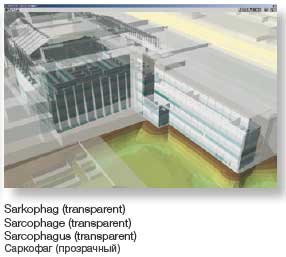
What's new and quite interesting here are recent ArcView GIS [Geographic Information System] and computer-generated 3D maps of the site, many which include environmental radiation level isosurfaces (example from the GRS/IRSN 2005 report shown).

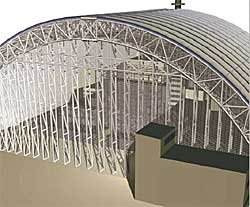
A computer rendering of Chernobyl Shelter 2, shown here, depicts the proposed new external containment structure for the hastily-constructed 1986 sarcophagus, now severely deteriorated by harsh weather and intense radiation.

According to the SIP [Shelter Implementation Plan], the goal of building the aluminum semicircular housing is "to safely confine the radioactive materials for at least 100 years and...to allow their retrieval from inside if need be as well as the dismantling of the old structure."

March 17, 2006

Dounreay Fuel Pellets a Health Risk on Scots Beaches?

According to the Scottish Environment Protection Agency (SEPA), nuclear fuel particles found on beaches near the defunct [Caithness] Dounreay nuclear facility in Scotland only "pose low-level risk to human health." However, the agency conceded that some pieces of higher-activity fuel rods are still washing up on public beaches. From the Edie News Center:
Fragments of nuclear fuel, which continue to turn up on beaches near the former experimental reactor, prompted SEPA to commission an enquiry into their effects on human health in 1998.

Particles found at the site so far are "relatively low in activity." Visible skin burns could only occur if a person encountered a particle of higher activity, according to the Health Protection Agency (HPA), which carried out the research. It estimated the chances of that happening at one in 80 million.

But the report also warned of particles with a higher radioactivity being brought onto the beach from the seabed. Such particles have not been detected since monitoring began in 1999, however, the researchers said.

The HPA looked more closely at vulnerable groups, such as people walking dogs or digging for bait on the affected beaches, and the time they spent there. It considered the possibility of people accidentally swallowing or inhaling the particles, or sand from the beach being used for children's sandpits.
More: Risk of Dounreay particles 'low' [March 14th, 2006 on BBC web]
"Dounreay nuclear debris could kill," [BBC, 1999]
"Decommissioning Caithness Dounreay" [Power-Technology.com]
"The threats at Dounreay," [N-Base]

(Image CC from Wikimedia Commons)

March 10, 2006

Upcoming World Conference in Belarus on "Chernobyl After 20 Years"

From the Bahrain News Agency:
Minsk, March. 10, (BNA)

A world conference will be held on April 19, in the capital city of Belarus, under the theme of "Chernobyl after 20 years: Urbanization strategy and Sustainable development of the Unfortunate Area." The conference which will mark the 20th anniversary of the disaster will be attended by representatives of 50 countries and 16 international organizations.

The Russian News Agency, Itar Tass, said today invitations for the conference was sent by Belarus President to Director of the International Atomic Energy Agency (IAEA), the World Health Organization (WHO) and UN Development Organization (UNDO). During the conference, Belarus, the most hit country, Russia and Ukraine will present reports on the efforts they had made to alleviate the disaster's effects.

February 23, 2006

U.S. Seaports Deal and the Nuclear Terror Threat

The controversial Dubai Ports deal has spurred heated debate about the widsom of having foreign-owned corporations overseeing management of our national ports of entry. One of our main unsolved port security issues is the problem of uninspected freight containers, which some experts contend may be the route through which nuclear materials or devices could most easily be smuggled into the U.S. for use in a a terrorist attack. From the New York Times's "Big Problem, Dubai Deal or Not":
Only 4 percent or 5 percent of those containers are inspected. There is virtually no standard for how containers are sealed, or for certifying the identities of thousands of drivers who enter and leave the ports to pick them up. If a nuclear weapon is put inside a container — the real fear here — "it will probably happen when some truck driver is paid off to take a long lunch, before he even gets near a terminal," said [retired Coast Guard commander Stephen E.] Flynn, the ports security expert.

That is where concerns about Dubai come in. While the company in question has not been a focus of investigations, Dubai has been a way station for contraband, some of it nuclear. Abdul Qadeer Khan, the Pakistani nuclear engineer, made Dubai his transshipment point for the equipment he sent to Libya and Iran because he could operate there without worrying about investigators.

"I'm not worried about who is running the New York port," a senior inspector for the International Atomic Energy Agency said, insisting he could not be named because the agency's work is considered confidential. "I'm worried about what arrives at the New York port." [read full article, reg. req.]

February 22, 2006

UK Hospital Waste Truck Leaks Radiation

This week, a private nuclear materials handling firm in the United Kingdom apparently neglected to install a protective "plug" on a cask of radioactive hospital waste being transported by truck across Northern England, causing the cask to emit high levels of radiation during transit. "By pure chance," the radiation beam pointed downwards, away from other vehicles, and no injuries were reported. From the Telegraph UK:
A highly radioactive beam was emitted from a protective flask as it was driven 130 miles, for three hours, across northern England on a lorry, a court heard yesterday....The flask belonging to AEA Technology was being used to transport a piece of decommissioned cancer treatment equipment from Cookridge Hospital, Leeds, to the Sellafield complex, Cumbria on March 11, 2002.

A judge was told how the container was "found to be emitting a narrow beam of radiation, of a very high dose rate, vertically down from that package base". [read full article]
The radiation dose rates reportedly "were in the order of 100 to 1,000 times above what would normally be considered a very high dose rate and measurement was beyond the capabilities of normal hand-held monitoring equipment." The company responsible for handling the cask's transport, AEA Technology, "a privatised arm of the UK Atomic Energy Authority," has allegedly admitted to a series of recent safety breaches. The company was due to be fined in a court proceeding in connection with an earlier safety violations, but the court has delayed setting the final judgment in light of this new incident.

More details at The Australian and BBC News Online.

December 08, 2005

Chernobyl News: Resettlement, More Tourism, and Removal of Nuclear Fuel from Closed Reactor Units

Crews have begun dismantling the remaining nuclear fuel stockpile from the closed reactors at Chernobyl, including the only recently-decommissioned Reactor 3 (the unit involved in the 1986 explosion was Reactor 4). From the Seattle Post-Intelligencer, via AP:
KIEV, Ukraine -- Experts have begun unloading radioactive fuel from one of the closed reactors at Ukraine's Chernobyl nuclear power plant, the plant said Tuesday.

Reactor No 3. - the last to continue operating - was closed for good in 2000, but it was never emptied of fuel. The remaining fuel in reactor No. 3 and reactor No. 1 made it impossible to start construction of a new shelter over the fourth reactor, destroyed in the 1986 explosion and fire that spewed radiation over much of northern Europe.

In an effort to prevent further radiation release, engineers hastily erected a concrete-and-steel shelter over the damaged reactor, but parts of it are crumbling, and a new shelter is needed. Originally officials had planned to unload the remaining fuel into a new storage depot, but plans for its construction were suspended until 2010. The plant's spokesman, speaking on customary condition of anonymity, said the fuel will instead be unloaded into a Soviet-era used fuel depot. Unloading the fuel, which began Monday, is necessary to make the plant entirely inoperative, Chernobyl staff said.
In other Chernobyl news, Pravda reports the Ukraine is seeking to boost national revenue by offering more tours of the ravaged Exclusion Zone to foreign travelers, and RIA Novosti News says Ukrainian president Viktor Yushchenko has instructed Kiev officials to begin legalizing the homes of squatters who have moved in the area without permission.